Festive Season Marketing Checklist for D2C Brands: What to Plan
Festive season marketing checklist for D2C brands: bundles, packaging, customer service, and content to plan before Navratri through Diwali.
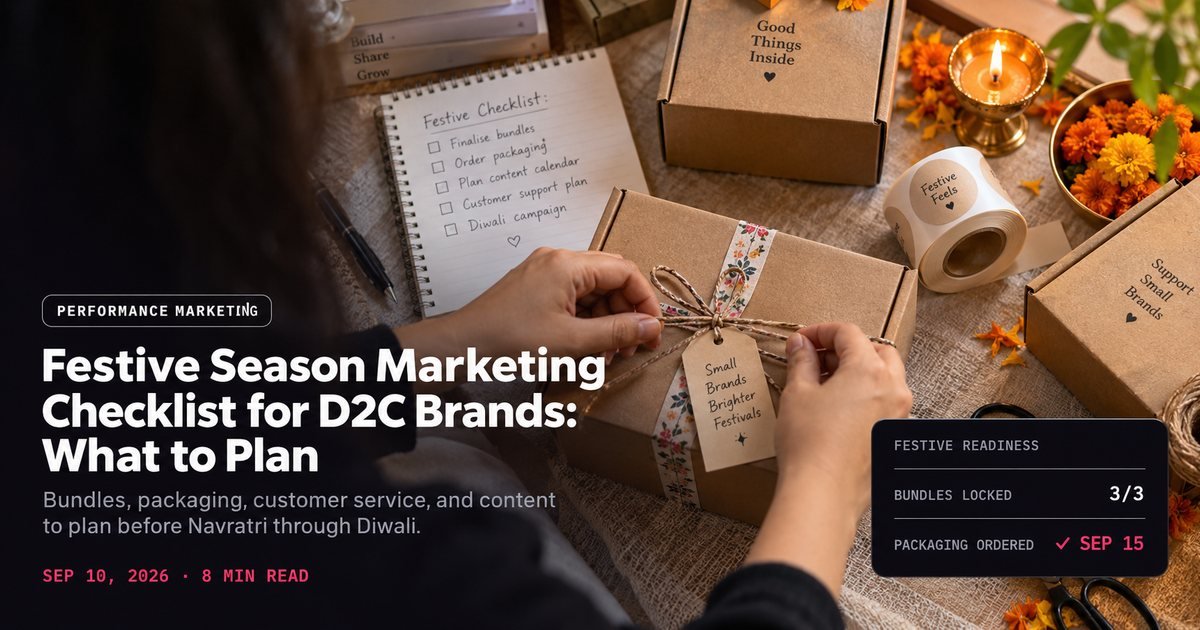
Most founders start their festive season marketing checklist with the ad budget, when it belongs closer to the bottom of the list, fixed only after everything else is ready.
India's festive calendar runs long: Navratri and Dussehra in October, Diwali and Bhai Dooj in November, wedding season stretching past that. Brands that treat it as one Diwali sprint miss weeks of gifting intent that started building well before the biggest day.
By the time the first festival traffic arrives, your ad account can only sell what your brand is actually ready to deliver. Bundles nobody wants, packaging that looks like a Tuesday, a support inbox that goes quiet for two days: none of that gets fixed by adding more spend.
I've sat in enough festive planning calls to know which brands win. Almost always, it's the ones who worked through a real checklist in September, while everyone else was still deciding on a discount percentage.
Six things to plan before you touch your ad budget
Start with these, in this order, and the ad spend conversation gets a lot simpler later. Each item on its own is straightforward; the trouble is that founders usually skip straight to spend and leave the rest as details to fix once traffic is already coming in.
Gifting bundles, not just discounted single SKUs. Festive season shopping, Diwali most of all but Raksha Bandhan and wedding season too, is gift shopping for a huge share of buyers, and a thoughtful ₹1,500 bundle often outsells three separate 20%-off products.
Packaging that photographs well. A customer who unboxes something festive-looking posts it. One that gets a plain courier bag with a bill inside doesn't.
A content calendar for the full six weeks, not just launch day. Festive buyers browse for weeks before they buy.
Support capacity for a traffic spike. Slow replies during peak season cost more sales than a slightly higher CPM ever will.

Inventory buffers on your bestsellers. Running out of your top three SKUs during peak week is the single most avoidable revenue loss of the season.
A plan for what happens after the sale. A thank-you note, a reorder nudge, a loyalty offer. Festive buyers who feel remembered come back for the next occasion on the calendar, Bhai Dooj, then Holi.
Building gift bundles that actually move
Most brands bundle by convenience: whatever's sitting in the warehouse gets shrink-wrapped together. That rarely sells.
Build bundles around a gifting occasion instead. A "for your mother" bundle. An "office festive exchange under ₹500" bundle, useful for Diwali or Dussehra. A "self-care after the guests leave" bundle. Naming the occasion does more work than the discount does.

Packaging and unboxing are part of the marketing
A festive product that arrives in generic packaging undersells itself twice. Once at the point of sale, when the photos on your site don't match reality. Again at unboxing, when there's nothing worth sharing.
You don't need a full packaging redesign. A festive sleeve, a small motif sticker, a diya for Diwali or a marigold for Dussehra, plus a card with a handwritten-style note goes a long way. Founders running ecommerce operations at scale should brief their packaging vendor on festive SKUs by mid-September; lead times stretch as every brand orders festive packaging at once, for every festival on the calendar.

Customer service is marketing during festive season
A brand that answers a DM in ten minutes during peak season converts hesitant buyers that a brand replying in six hours simply loses. Festive shoppers are comparing three or four brands at once and buying from whoever removes friction fastest.
Plan for it like a marketing line item, not an afterthought. Add temporary support hours, pre-write answers to your five most common questions (delivery timelines, COD availability, exchange policy), and make sure whoever's answering DMs and comments across the festive stretch actually has authority to resolve issues, not just escalate them.
If your performance marketing and support functions aren't talking to each other during peak spend, you're paying to drive traffic that a slow reply then loses for free.
Content that earns attention before the sale even starts
Buyers browsing for festive gifts from Navratri onward are still forming a shortlist rather than deciding what to click "buy" on. Watch which brand shows up with gift guides, sizing help, and behind-the-scenes packaging content during that window; that's usually the one a brand posting only offer graphics loses to.
Split your six-week content calendar into three phases instead of one flat push. Early weeks earn attention with gift guides and category education, useful even to someone who isn't buying today. Middle weeks build desire with product-in-use content and early access for your list. Final weeks convert, with urgency, bundles, and direct offers front and centre.
A brand that skips straight to phase three loses the shoppers who were still deciding in week two. By the time your discount posts show up, a competitor who ran the gift-guide content earlier has already made the sale.
What most brands get wrong about festive urgency
Countdown stickers and "sale ends tonight" banners work on a shopper who already trusts you. They do far less for someone seeing your brand for the first time during peak festive traffic, which is exactly who most of your paid reach reaches during October.
A first-time visitor needs a reason to trust the brand before urgency means anything to them.
Real reviews on the product page, a clear returns policy visible before checkout, and a founder's face somewhere on the site all do more to convert a stranger than a ticking clock does. Save the urgency tactics for retargeting warm visitors who've already browsed once; that's where they actually work.
A realistic six-week timeline
Work backwards from Diwali day, November 8, the biggest date in the festive calendar, instead of forward from today. The same timeline logic applies to Navratri and Dussehra a few weeks earlier; just shift every milestone back by however many weeks separate the two dates this year.
Six weeks out, finalise your bundles and confirm festive packaging orders. Five weeks out, brief your content calendar and get creative approved. Three weeks out, stress-test your support setup and confirm inventory buffers on bestsellers. The final week, everything should already be built, so the only job left is running it and watching the numbers.
Founders who've already locked their ad-spend plan for the same window should read our breakdown of the festive Meta ads budget curve next, since the two plans need to move together.
Treat the timeline as a shared document your whole team can see, rather than something living only in the founder's head.
A support lead who doesn't know the content calendar can't prep for the questions a new campaign will generate. A warehouse team that hasn't seen the bundle list can't forecast packing time accurately.
Most of the checklist failures I've seen came down to one person holding the whole plan in their head while everyone else found out when the traffic arrived.
Category differences worth planning around
A fashion or beauty brand faces different festive pressure than a home or food brand. Gifting intent peaks earlier for fashion, since buyers want items in hand before Diwali week itself, while food and wellness gifting often happens closer to the day.
That timing gap should shape when you push each part of the checklist. A fashion brand needs bundles and packaging locked by mid-September and content live from the first week of October, since a late scramble means missing the window when buyers are actually deciding. A food or home brand has a little more room to build through October, with the final push carrying more weight than it would for fashion.
Knowing your category's timing also changes how you read early results. A fashion brand seeing flat numbers in week one of October should worry; a home brand seeing the same thing in that window still has time to build.
A checklist worth pinning
- 1Build 2-3 occasion-based gift bundles, not just discounted single products.
- 2Order festive packaging by mid-September, before vendor lead times stretch.
- 3Draft a six-week content calendar, not just a launch-day post.
- 4Add temporary support capacity and pre-written answers for peak week.
- 5Confirm inventory buffers on your top three bestsellers before October.
- 6Plan a post-purchase touch, a note or reorder nudge, so festive buyers come back.
None of this replaces a strong media plan. It just means the media plan has something worth scaling behind it once October's CPMs start climbing.
Start the conversation with whichever item on this list feels furthest behind. Skip the temptation to check off the easy ones first; the item you've been avoiding is usually where the real revenue is sitting unclaimed.
If you want help turning this checklist into an actual campaign, book a free strategy call and we'll map it against your specific catalog.
Book a call