Food Influencer Marketing for Restaurants in India: Cost and ROI
Food influencer marketing for restaurants in India: what creators actually charge, which tier to book, and how to measure a reservation lift.
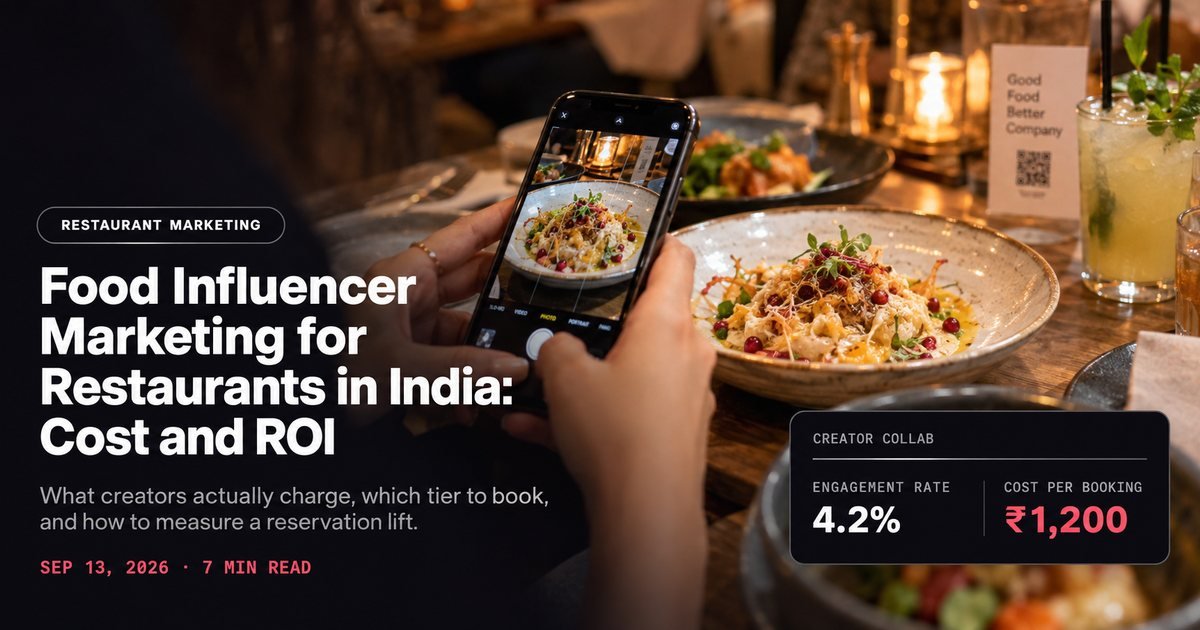
A restaurant owner messaged me last month asking why their ₹25,000 influencer campaign got almost no bookings, while a nearby café spent ₹4,000 on three creators and filled a Friday night. Same city, same general audience, wildly different result. The gap wasn't budget. It was food influencer marketing strategy, or the lack of one.
Most restaurants book whichever creator has the biggest follower count and hope for the best. Expensive way to learn what actually works.
I've cast food creators for restaurants across three cities now, and the pattern is consistent: the tier and the brief matter more than the fee.
What food influencers actually charge
Budget ₹3,000-₹15,000 per collaboration for micro creators with 5,000-50,000 followers in a Tier 1 Indian city. That range covers a paid Reel or a set of Stories, usually with a complimentary meal on top.
Mid-tier creators, 50,000-200,000 followers, typically charge ₹15,000-40,000 per post. Macro or celebrity food influencers can run well past ₹1 lakh for a single collaboration.
Fees vary by city too. Mumbai and Delhi creators generally cost more than the same follower count in a Tier 2 city.
None of these numbers include usage rights. If you want to repost the content as an ad or keep it for your own page beyond the standard organic window, expect to pay an additional 20-40% on top of the base fee.
Why micro creators usually outperform bigger names
A well-performing Reel from a local food page can lift reservations by roughly 30% within a week, and that lift tracks far more reliably with local micro creators than with national food bloggers.
The reason is audience match. A creator with 20,000 followers concentrated in your city sends people who can actually walk into your restaurant tonight. A creator with 500,000 followers spread across the country sends views, likes, and very few people within driving distance.
Check engagement rate above 3% and confirm audience location matches your city before booking anyone, regardless of follower count. A creator's own analytics screenshot, or a quick look at who's commenting, tells you more than the follower number ever will.
Five formats worth booking
Restaurant influencer campaigns in India mostly work through five tested formats. Complimentary meal reviews are the baseline, a creator visits, eats, and posts an honest take.
Promo code collaborations pair a creator's audience with a trackable discount, which doubles as your attribution method. Menu launch exclusives give one creator first access to a new dish before it's public, which reads as a genuine scoop rather than an ad.
Instagram takeovers hand your own account to a creator for a day, borrowing their content style for your existing audience. Contest or giveaway partnerships trade a free meal or voucher for entries, useful for a quick follower and email-list boost around a slow period.

What a good brief actually looks like
Most restaurants send a creator a vague ask: come eat, post something nice. That gets generic content that could be for any restaurant in the city.
A brief that works names the specific dish or moment to feature, gives one or two talking points the restaurant actually wants surfaced (a new chef, a sourcing story, a technique), and states the format clearly, Reel or Story, review or launch. Creators produce sharper content when they know exactly what a restaurant considers its best angle, rather than guessing.
Leave the actual words and delivery style to the creator. Restaurants that script every line lose the authenticity that made the creator's audience trust them in the first place, and audiences can tell the difference between a genuine take and a read-aloud ad.
Casting the right creator for your restaurant
Match the creator's content style to your restaurant's actual experience rather than their food-niche label alone. A creator whose feed is all bright, fast-cut street food content will make a quiet fine-dining room look empty on camera, regardless of how good the food is.
Ask for three past collaboration links before booking anyone new. Watch the comments section, not the view count. Genuine questions about the dish or the location beat generic emoji replies every time; emoji spam often signals a bought-engagement account.
Timing collaborations around your actual slow periods
Book influencer content for the day or week you actually need bodies in seats rather than whenever a creator happens to be free. A Tuesday-lunch collaboration does far more for a restaurant fighting weekday slumps than another Saturday-night post, which would likely have been full anyway.
Menu launches deserve their own separate timing logic. Give a creator first access a few days before the public reveal, so their post reads as a genuine early look rather than an ad running alongside everyone else's. That timing difference alone often changes how the comments section responds, since followers can tell when they're seeing something first.
Measuring whether it actually worked
Reach and likes feel good and mean very little on their own. Tie every collaboration to something trackable: a promo code, a "saw it on Instagram" mention at booking, or a reservation-link click if the creator can post one in their bio or Story.
A restaurant running several collaborations a month should track cost per booking the same way it tracks cost per order on Zomato or Swiggy, not treat influencer spend as a separate, unmeasured line item. If a creator's promo code brings in five bookings off a ₹6,000 fee, that's a number worth comparing directly against your aggregator ad CPO.
Our influencer marketing team runs exactly this kind of tracked casting for restaurant and café clients through our restaurant and café marketing work, pairing local creator content with the paid and organic side so bookings, not just views, are the number that matters. Founders locking in written terms with a creator should also read our guide on influencer marketing contracts before the first shoot, since usage rights and posting timelines belong in writing from the start.
A realistic casting checklist
One more thing worth planning for: seasonality. Festive weeks and long weekends see creator rates climb as demand for shoots rises across every restaurant trying to book the same handful of good local creators, so lock in festive-season collaborations at least three weeks out rather than the week before.
- 1Set a per-collaboration budget of ₹3,000-₹15,000 for micro creators before considering anyone bigger.
- 2Confirm engagement rate above 3% and audience location matching your city.
- 3Pick a format, review, promo code, menu launch, takeover, or giveaway, that fits the specific goal for this booking.
- 4Review three past collaborations for content style and comment quality before confirming.
- 5Attach a trackable promo code or mention to every collaboration, so cost per booking becomes the number you measure instead of reach alone.
A roster built this way compounds. Six months in, you'll know which two or three creators consistently drive bookings. That short list becomes worth a standing monthly retainer instead of one-off bookings negotiated fresh every time.
Start small. One tracked collaboration this month tells you more than a bigger, unmeasured campaign ever will.
If you want help building a local creator roster for your restaurant, book a free strategy call and we'll map out a casting plan against your budget.
Book a call