What Is Performance Marketing? A D2C Brand's Guide to Google, Meta, and Beyond
Performance marketing means paying for results, not impressions. Here's what it covers, what it costs, and how D2C brands should run it.
Every founder hears the term at some point in a pitch meeting or an agency call. Someone says "we'll run performance marketing for you" and nods like that explains everything, when it usually explains nothing.
Performance marketing is advertising you pay for based on measurable outcomes, not exposure. A click. An install. A purchase.
You're buying a specific, trackable action instead of hoping a billboard sinks in. If that action doesn't happen, you've learned something you can fix within days.
For a D2C brand in India selling skincare, supplements, or apparel, this distinction is the entire game. You don't have the balance sheet of a legacy FMCG company running TV spots for brand recall. Every rupee spent on Google or Meta has to justify itself against a number: cost per acquisition, return on ad spend, lifetime value.
This guide breaks down what it actually means, how it's different from brand marketing, which metrics to watch, and how to structure your first real effort without wasting your first six months of budget.
What performance marketing actually means
The core idea is simple: you pay for a result, and the platform (or agency) is accountable to that result.
Contrast this with a magazine ad or a sponsored TV segment. You pay a flat fee upfront, and there's no direct line from that spend to a sale. Maybe brand awareness went up, maybe it didn't. You'll never really know.
Performance channels flip that. Google Ads charges you when someone clicks. Meta Ads charges you when someone sees or clicks, depending on the objective you pick, and it optimizes delivery toward whatever action you tell it matters, purchase, add-to-cart, lead form fill. Every rupee has a receipt.
That receipt is why performance marketing has swallowed most ad budgets over the last decade, and why the channels keep multiplying. Google and Meta are the two anchors, but quick commerce ads on Blinkit and Zepto are now a real third pillar for D2C brands selling anything that fits a 10-minute delivery slot.
Performance marketing vs brand marketing
Think of these as different tools for different jobs, not competing philosophies. Most brands need both eventually, just not on day one.
Brand marketing builds recognition and trust over months or years. Think influencer partnerships that aren't tied to a discount code, YouTube pre-rolls, out-of-home ads in metro stations.
The payoff is slow and hard to measure cleanly. But it lowers your cost of acquisition over time, because people already know who you are when the ad shows up.
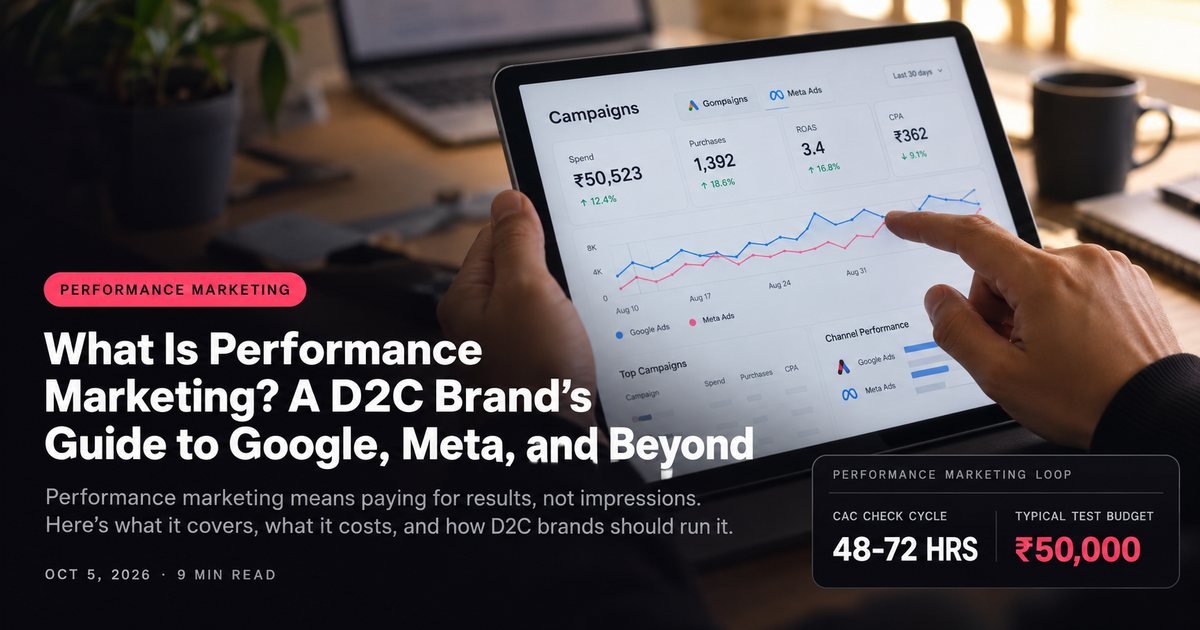
Performance marketing runs on a shorter cycle. Launch a campaign, watch CAC within 48-72 hours, kill what's losing money and scale what's working. Most bootstrapped D2C brands start here for one reason: a ₹50,000 test budget can tell you, definitively, whether an offer works before you commit real money.
A good marketer is looking at exactly this feedback loop every morning: yesterday's spend against yesterday's revenue, rather than last quarter's brand tracker.
The mistake we see constantly: founders trying to run brand-style campaigns (broad reach, "let it breathe for three months") on a performance budget that can't survive three months of losses. If you don't have the cash runway of a funded brand, performance marketing has to earn its keep from week one.
The metrics that actually matter
Skip the vanity numbers. Impressions and reach mean nothing if they don't connect to revenue. Three metrics decide whether a performance marketing program is working:
- CAC (Customer Acquisition Cost): total ad spend divided by number of new customers. If your average order value is ₹1,200 and CAC is ₹900, you're barely breaking even before returns, packaging, and payment gateway fees.
- ROAS (Return on Ad Spend): revenue divided by ad spend. A 3x ROAS on Meta sounds fine until you realize your margins are 30% and you're losing money on every sale.
- CPA (Cost Per Action): what it costs to get one specific action, a lead, a signup, an add-to-cart. Useful for funnels where purchase isn't the first ask.
Put these three numbers on a dashboard you check daily. A brand that only reviews CAC once a month is flying blind for 29 of those 30 days.
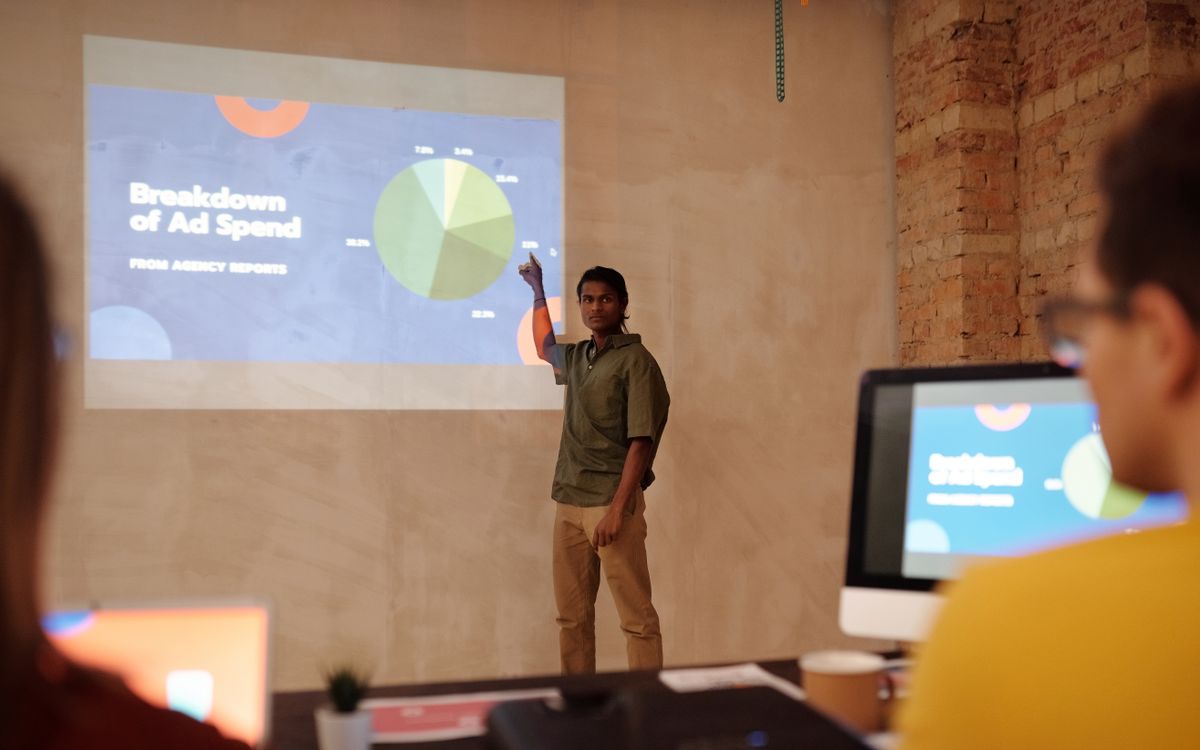

Here's the part most first-time advertisers miss: these numbers don't stay static. CAC creeps up as you scale spend, because the platform runs out of your cheapest, most obviously interested audience and starts reaching further. A CAC that looks great at ₹20,000 a day of spend can look ugly at ₹1 lakh a day. Budget for that drift before it surprises you.
Where the budget actually goes: Google, Meta, and quick commerce
Google Ads captures intent. Someone typing "vitamin D supplement India" into a search bar has already decided they want the category, and you're just winning the click.
Meta Ads (Instagram and Facebook) works the opposite way: it creates intent. Nobody wakes up searching for your niche skincare serum by name, so Meta shows the right creative to the right scroll-happy person at the right moment and turns a stranger into a buyer in one session.
If you want the specifics on setup, budgets, and 2026 benchmarks, we've broken that down separately in our Meta Ads guide for D2C brands in India.
Quick commerce ads are the newest line item, and they're growing fast for anything impulse-buyable: snacks, personal care, small-ticket beauty. Blinkit and Zepto now run auction-based ad placements inside their apps, similar in mechanics to Amazon's sponsored product ads. If your product fits a 10-minute delivery window, this channel deserves a test budget alongside Google and Meta rather than in place of them.
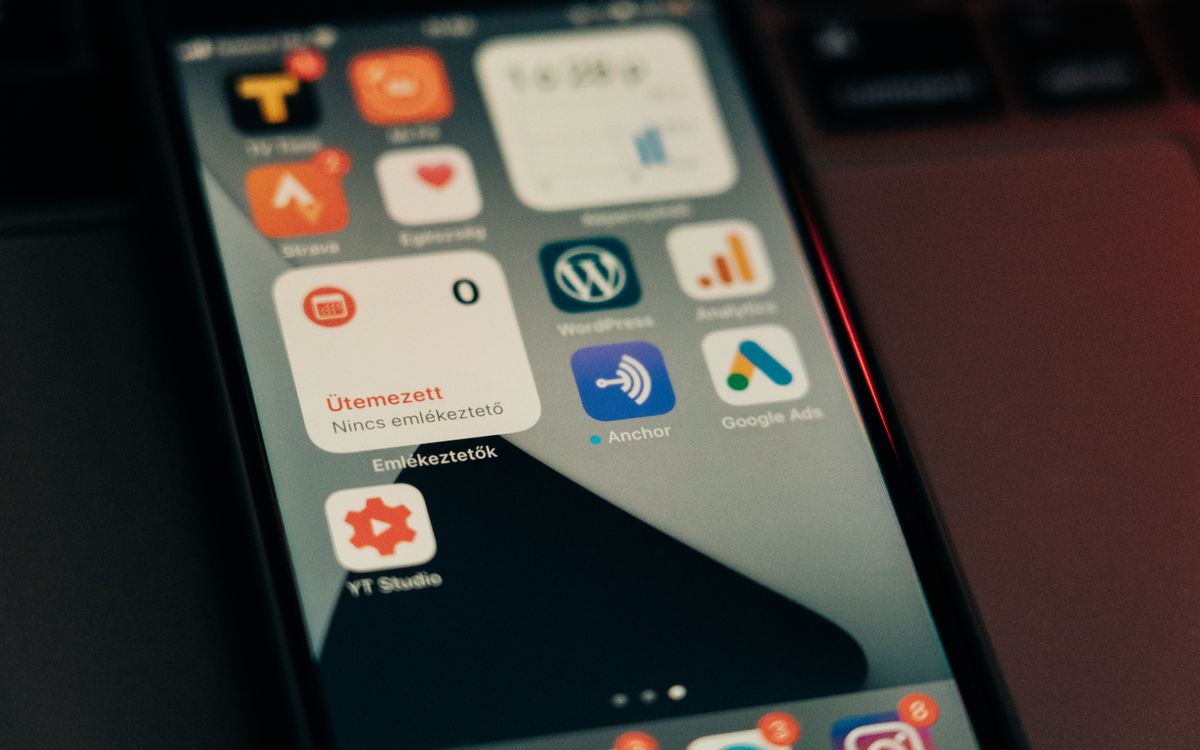
A quick glance at a phone's ad-heavy app screen is a fair snapshot of where your customer's attention actually lives today: three or four apps, all fighting for the same thumb.
Existing "digital marketing cost" and "agency for marketing" posts already cover generalist retainer math. For a plain explainer on what a full-service digital marketing agency does versus a channel specialist, that's the better companion read.
How to structure your first performance marketing effort
Don't split a small budget across five channels on week one. Pick one channel, prove profitability, then expand.
- 1Start with the channel that matches your buyer behavior: Google if people search for your category by name, Meta if you're creating demand for something new.
- 2Run a two-week test at a modest, defined budget, enough to get statistically useful data, not enough to bankrupt you if it fails.
- 3Track CAC and ROAS daily, not weekly. Kill underperforming ad sets fast; three days of bad data is enough signal.
- 4Once one channel is profitable at your target CAC, add a second. Don't run two unproven channels simultaneously; you won't know which one is actually working.
- 5Reinvest a fixed percentage of proven profit into scaling spend, and re-test creative every two to three weeks before fatigue sets in.
This sequencing question, which channel first and how fast to add the next one, is exactly what we cover in more depth in our guide to sequencing online marketing channels and budget for D2C brands.
Running it yourself vs hiring it out
Some founders run their first Google or Meta campaigns themselves, and that's genuinely fine for a first ₹50,000-₹1,00,000 test. You'll learn the platform's language and catch obvious mistakes agencies sometimes miss.
The problem shows up at scale. Constant creative refreshes, audience testing, and budget reallocation across ad sets eat 15-20 hours a week once you're spending seriously.
That's usually when brands bring in a dedicated performance marketing partner instead of hiring an in-house team from scratch. If you're weighing that decision, our breakdown of what a performance marketing agency actually costs in India covers realistic retainer ranges and what to expect for that fee.
Whichever path you pick, the discipline stays the same: track CAC daily, don't marry a losing ad set out of sunk-cost stubbornness, and treat every rupee as a bet you're allowed to walk away from.
If you'd rather have someone run this blended Google-plus-Meta account against a real CAC target from day one, you can book a free strategy call and we'll tell you honestly whether your current numbers support scaling or need fixing first.
Takeaways
- 1Performance marketing means paying for a measurable result, a click, a lead, a sale, not for exposure.
- 2Google captures existing intent; Meta creates new intent; quick commerce ads are the fast-growing third channel for impulse categories.
- 3Watch CAC, ROAS, and CPA daily. Monthly reviews miss the drift that kills profitability.
- 4Start with one channel, prove it's profitable at your target CAC, then add the next.
- 5Expect CAC to rise as you scale spend; budget for that drift instead of panicking when it happens.
Want us to audit where your CAC is leaking?
Book a call