Conversion Rate Optimization for D2C Shopify Stores: The Complete 2026 CRO Guide
Conversion rate optimisation for Indian D2C Shopify stores: the fixes that lift CRO most, with real before/after numbers and a priority checklist.
Most Indian D2C founders think conversion rate optimisation means running an A/B test on a button colour. In reality, conversion rate optimisation is mostly about removing the ten small frictions that make a mobile shopper on a 4G connection in Jaipur abandon your checkout at the last screen.
We've rebuilt checkout flows for enough Shopify stores to know the pattern by now. A brand comes to us converting at 0.9%, convinced their Meta ads are the problem. We look at the store first. Nine times out of ten, the traffic was never the issue.
This guide walks through what actually moves conversion rate on an Indian Shopify store, with real before/after numbers by fix, and a checklist ranked by what to do first. No theory, no "test everything" hand-waving.
Why Indian D2C conversion rates lag global benchmarks
Global Shopify benchmarks put average conversion rate somewhere between 1.5% and 2.5%. Most Indian D2C stores we audit sit under 1%. The real reason is that most Shopify themes are built for a US shopper on Wi-Fi with a saved card. An Indian shopper on mobile data is still deciding whether to trust a brand they found through an Instagram ad three minutes ago.
Three things make the Indian buyer journey structurally different.
Mobile dominates traffic: 75-85% of D2C traffic in India is mobile, often on mid-range Android phones and patchy networks. A desktop-first checkout kills conversion before the shopper even sees your product properly.
COD is still a trust crutch more than a preference. A large share of first-time buyers pick cash on delivery because they don't trust an unfamiliar brand enough to pay upfront, not because they actually want to pay cash.
UPI changed the payment layer, but the trust layer stayed exactly where it was. UPI made prepaid checkout fast. You still have to earn a shopper's trust separately, the same way you always did.
Fix for the trust gap first, and the payment-method conversation gets a lot easier. We've written a full breakdown of when to allow COD and when to go prepaid-only in our piece on whether an Indian D2C brand should ban COD, which is worth reading alongside this one.
Checkout friction: where most conversion rate leaks out
Checkout is where the biggest, fastest wins live. This is the stage where an interested buyer becomes a paying one, and it's also where Shopify's default setup quietly costs you the most.
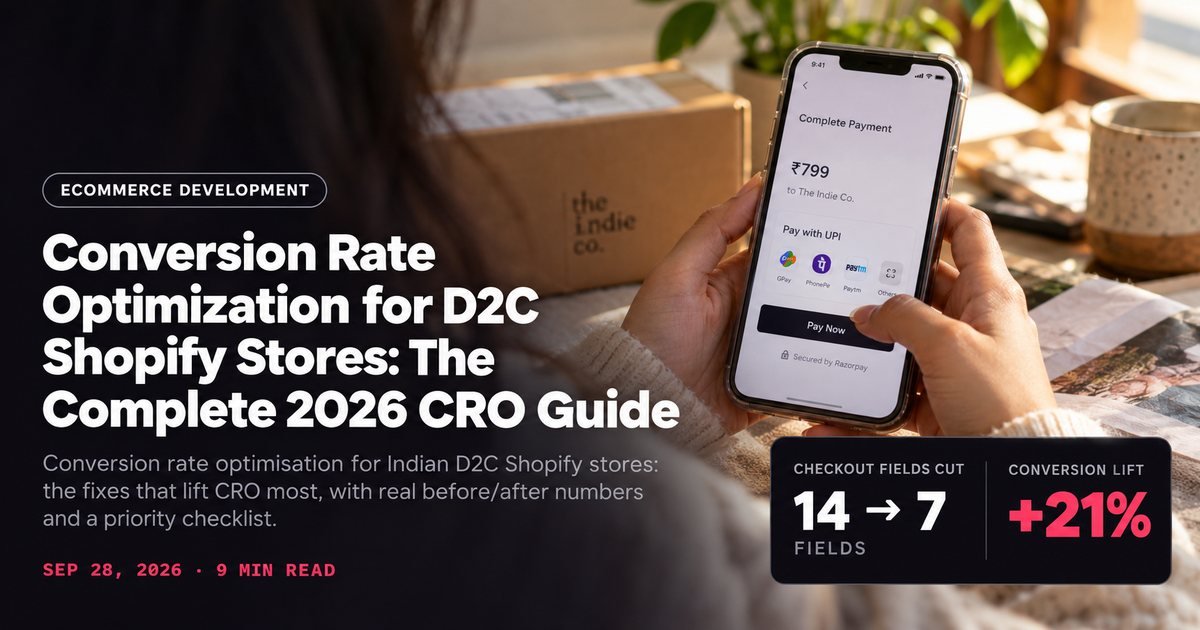
We audited a skincare brand's checkout last year and counted 14 fields before payment: full name, email, phone, address line 1, address line 2, landmark, city, state, pincode, country, GST number (unused by 99% of buyers), a marketing opt-in, a coupon code box, and a delivery instructions field.
We cut it to 7. Nothing else changed. Conversion at the payment step rose from 61% to 74%.
Guest checkout matters more in India than most founders assume. Forcing account creation before purchase is one of the fastest ways to lose a mobile shopper who is three taps from putting the phone down entirely.
If you must collect an account, do it after the order confirms, not before. Auto-detecting pincode to fill city and state saves 15-20 seconds per order on mobile keyboards too.
It also removes a common typo-driven delivery failure. That failure later shows up as a support ticket, but it started life as a lost conversion.

A home decor client stripped their checkout from 12 fields to 6, added pincode autofill, and defaulted to guest checkout. Checkout completion rate moved from 58% to 71% over one month. No new ads, no new discounts, just less friction between "add to cart" and "order placed."
Payment trust signals: COD, UPI, and why they need different treatment
Payment method choice looks like a backend setting. To the shopper, it's a trust decision made in about two seconds. Get the order and framing wrong and you lose people who were already sold on the product.
UPI apps (GPay, PhonePe, Paytm) are what most Indian shoppers actually have muscle memory for. If your payment page defaults to a card entry form with UPI buried below, you're adding a scroll and a decision delay that costs conversion.
Put UPI first, cards second, COD last but visible.
A small COD handling fee (₹40-60) does two things. It nudges price-sensitive-but-not-trust-sensitive buyers toward prepaid. It also covers your actual reverse logistics cost when a COD order gets refused at the door, something that happens on 8-15% of COD orders depending on category.
One D2C nutrition brand we worked with added a ₹49 COD fee alongside a "prepaid orders ship 1 day faster" message next to the payment options. Prepaid share of orders moved from 34% to 52% within six weeks, and overall conversion didn't drop, because the shoppers who wanted COD still had it.
Trust badges near the payment button matter more than founders expect, but only the right ones. A generic "secure payment" lock icon does almost nothing anymore. What works: your Razorpay or Cashfree logo (shoppers recognise these), a specific return-window callout ("7-day easy returns"), and a real number of orders delivered if you have one worth showing.
Product page trust elements that actually move conversion
By the time a shopper lands on your product page from an ad, they've already decided they're interested. The product page's job is to remove doubt. Selling harder comes later, if at all.
Apparel brands without a clear size chart linked directly under the size selector see cart abandonment run 20-30% higher than brands with one. The shopper leaves the page to search "brand name size chart" on Google, and often doesn't come back.
Return policy visibility is a bigger lever than most founders rank it. Burying "7-day returns, no questions asked" in a footer link means almost nobody reads it before buying. Put a one-line version directly on the product page, near the price, in the same visual weight as the price itself.
Real customer photos beat studio shots for trust, even when the studio shots are prettier. A beauty brand we audited added a UGC photo carousel just below the main product image, sourced from actual customer Instagram tags. Add-to-cart rate on that product page rose 18% over four weeks with the photos in place versus the studio-only control page.

Reviews need a minimum bar before they help. Fewer than 10 reviews on a product often reads as suspicious rather than reassuring to an Indian shopper who has been burned by fake-review brands before. If you're under that bar, consider hiding the review count until you cross it, rather than displaying "(3)" next to five stars.
Mobile page speed: the fix nobody wants to prioritise
Page speed feels like a technical problem, so founders hand it to a developer and move on. It's actually a conversion problem, and on Indian mobile networks it's often the single biggest one.
Google's own research puts bounce probability up sharply as load time crosses 3 seconds. Most unoptimised Shopify stores with heavy apps installed load in 5-8 seconds on a mid-range Android phone over 4G, and every extra second costs real conversion.
The usual culprits on Indian D2C stores: uncompressed hero images (often 2-4MB when they should be under 200KB), too many marketing apps running simultaneous scripts, and third-party font files that block rendering. The apps problem alone is common: review widgets, chat widgets, upsell popups, and heatmap trackers all loading at once on a single product page.
We ran a speed pass for an ecommerce sales-focused fashion brand. We compressed images, removed three unused apps, and deferred non-critical scripts. Mobile load time dropped from 6.2 seconds to 2.4 seconds.
Conversion rate on mobile traffic rose from 0.7% to 1.3% over the following month, with no other changes made. That's the kind of lift a pure creative or targeting change rarely produces alone.
If you're not sure what a rebuilt, speed-first store costs versus patching an existing one, we've laid out real numbers in our guide on what a Shopify store build actually costs in India.
The prioritised CRO checklist: do these first
Not every fix is worth doing on day one. Here's the order that produces the fastest, largest lift for most Indian D2C stores, based on what we've measured across client audits:
- 1Cut checkout fields to under 8 and enable guest checkout. Highest lift, lowest effort.
- 2Compress images and remove unused apps to get mobile load time under 3 seconds.
- 3Move UPI above cards on the payment page and add a small COD handling fee.
- 4Add a size chart or fit guide linked directly under the size selector, if you sell apparel or footwear.
- 5Put the return policy in one line near the price, not buried in the footer.
- 6Add real customer photos to your top 5 products by traffic.
- 7Add pincode autofill for address fields.
- 8Only then, start testing headlines, button colours, and layout variants.
Landing page conversion rate work matters, but it belongs after this list, once the basics are fixed. A beautiful ad landing page still loses the sale at a 14-field checkout on a slow mobile connection.
Most brands we audit have never seen their own numbers by device and payment method. Before running a single new campaign, pull your Shopify checkout funnel report and split it by mobile versus desktop, and by COD versus prepaid. The leak is usually visible within five minutes of looking.
If your store's foundation needs more than a few tweaks, our ecommerce and web development work covers exactly this: rebuilding a Shopify store around actual conversion rate, not just visual polish.
Before you start optimising, find out what a "good" number looks like for your category. Beauty, fashion and food stores all convert at different rates, so a generic 2-3% target will mislead you.
And if you want a second pair of eyes on where your specific store is leaking, a free strategy call is the fastest way to find out.
Book a call