Top Indian Influencers by Category (2026): How D2C Brands Find and Cast Them
Indian influencers span beauty, fashion, fitness and finance creators across four tiers. Here's how D2C brands actually find and vet them.
Search "indian influencers" and you'll get roundup articles naming the same twenty accounts every blog copies from each other. None of them tell you how to actually cast a campaign.
The real question a D2C founder has isn't "who's famous." It's "which creator, in my category, at my budget, will actually move product." That's a different problem, and it needs a different map: one built around category and tier, not a leaderboard of names that goes stale the moment someone's engagement tanks or their audience gets bought.
This guide breaks the Indian creator landscape into the categories that map to real purchase decisions, the four tiers that determine what each creator is actually good for, and the exact workflow we use inside our influencer marketing engagements to find and vet talent before a rupee gets spent.
The Indian influencer landscape, by category
Indian creators cluster around a handful of categories where audience trust translates into buying behavior. Each one behaves differently.
Beauty and skincare is the most saturated category in Indian influencer marketing. Thousands of creators post routines, dupes, and "get ready with me" content daily.
The upside: audiences here are primed to buy on a recommendation. The downside: engagement is inflated across the board, because bots specifically target beauty accounts for follower-count arbitrage.
Fashion splits into two very different audiences. Mass-market styling covers thrift hauls and budget outfit ideas. Premium and editorial covers designer collabs and occasion wear. A brand selling ₹800 kurtas and a brand selling ₹8,000 co-ord sets should never be shortlisting the same creators.
Fitness and wellness creators convert well for supplements, activewear, and home gym equipment. But the category has a credibility problem. Audiences have gotten sharper about spotting paid gym content that doesn't match the creator's actual training.
Real transformation stories and consistent posting history matter more here than raw reach.

Food covers restaurant reviews, home cooking, and recipe content, and it's one of the few categories where nano creators genuinely outperform bigger names, because hyperlocal trust ("this dhaba near my house") beats polish.
Finance and fintech is smaller but higher-intent. These creators explain mutual funds, tax saving, and credit cards to an audience that's actually about to make a financial decision, which makes disclosure and compliance non-negotiable (SEBI has fined advisory-style finfluencers before).
Parenting, tech, and home/lifestyle round out the list. Parenting creators drive strong word-of-mouth for baby and family products. Tech reviewers matter for gadgets and D2C electronics. Home and lifestyle (decor, kitchen, organization) has grown fast alongside India's home-renovation boom post-2023.
The four tiers, and what each one is actually for
Category tells you the audience. Tier tells you what the creator can do with that audience. Mixing these up is the single most common casting mistake we see from brands running their first campaign.
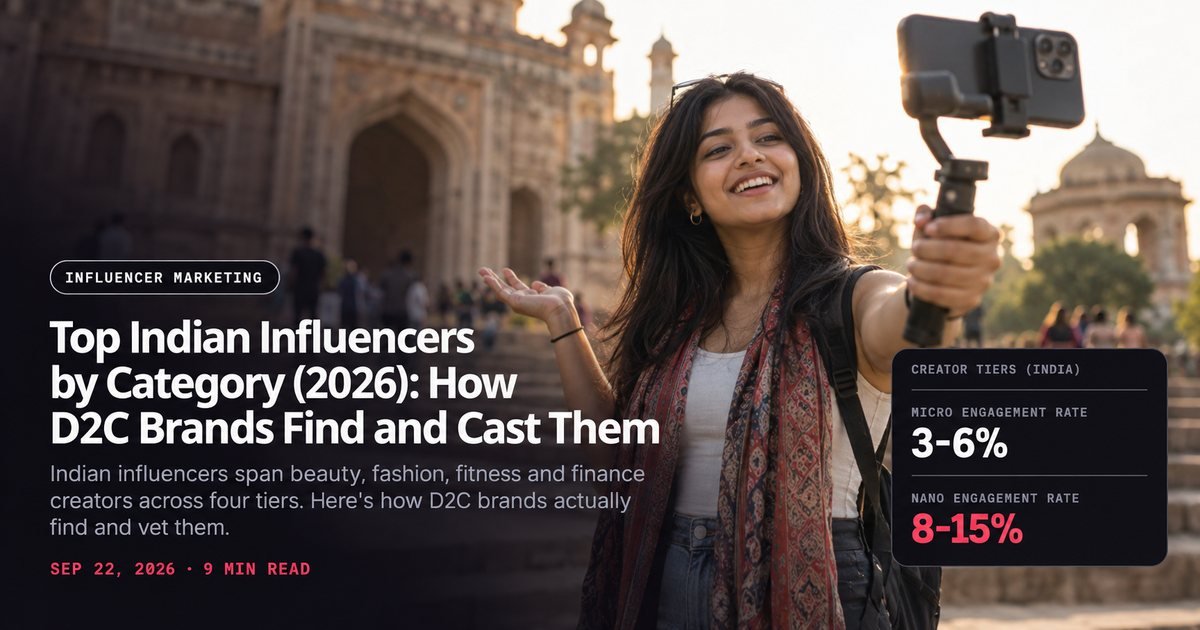
- Nano (1,000-15,000 followers): the highest trust, lowest reach tier. Nano creators feel like a friend giving a recommendation. Their engagement rate often runs 8-15%, far above bigger accounts. Use them for volume: 15-30 nano creators seeding a launch generates more believable social proof than one big name.
- Micro (15,000-100,000 followers): the workhorse tier for most D2C campaigns. Engagement typically sits between 3-6%. Costs run ₹3,000-₹25,000 per Reel depending on category and production ask. This is where most performance-driven whitelisting budgets should go.
- Mid-tier (100,000-1 million): these creators have real production value and often run their own small teams. Expect ₹25,000-₹1.5 lakh per deliverable. They're good for brand credibility and reach, but audience quality varies wildly here.
- Macro (1 million+): celebrity-adjacent reach, used for awareness campaigns rather than direct conversion. Costs run into lakhs per post, and attribution gets murky. Treat this as a brand-building spend, not a performance channel.
Most D2C brands overspend on mid-tier and macro before they've proven the offer works at nano and micro. Flip that sequence: prove the hook and creative angle cheap, then scale reach once you know what converts.
If you want the full breakdown of what each tier and format actually costs in India right now, our influencer marketing pricing guide walks through real Reel, story, and UGC-license rates by category.
How to actually find creators in your category
Manually scrolling Instagram hashtags doesn't scale past your first five creators. Here's the workflow that does.
1. Start with discovery platforms, not hashtags
Tools like Kofluence, Winkl, GRIN, Qoruz, and Instagram's own Creator Marketplace let you filter by category, city, follower band, and past brand collaborations. Qoruz in particular is useful for Indian-specific audience demographics (state, tier-1/2/3 city split) that global tools miss.
Export a longlist of 40-60 creators per category rather than trying to hand-pick five perfect names. Half of any longlist gets eliminated in the next step anyway.
2. Run an audience-overlap and fraud check before you talk numbers
This is the step brands skip, and it's the one that saves the most money. Run each shortlisted creator through HypeAuditor or Modash to check:
- Follower growth pattern. A sudden spike usually means a bought batch.
- Audience geography. An "Indian" creator with 40% followers in unrelated countries is a red flag.
- Engagement authenticity score, flagged directly by the tool.
A creator with 200,000 followers and a 22% audience-overlap with three other accounts you're also considering isn't actually adding reach, they're recycling the same eyeballs. Cut them or renegotiate the rate down.
3. Sanity-check engagement rate by hand
Don't trust the follower count. Open the creator's last 10 posts and calculate (likes + comments) ÷ followers × 100. Anything under 1% for a nano or micro creator is a warning sign; anything over 15% for a mid-tier or macro account often means bought engagement rather than a genuinely loyal audience.

4. Send a real outreach DM, not a copy-paste pitch
Generic "collab?" DMs get ignored by the creators worth working with. A working template:
"Hi [name], loved your [specific recent post] video, especially [specific detail]. We're [brand], and we think your audience would genuinely connect with [specific product/angle]. Open to a paid collab, budget ₹[X]-₹[Y] depending on format? Happy to send the product first so you can decide if it's a fit."
Naming the specific post and offering the product before demanding a yes filters out creators who'll say yes to anything for a fee.
5. Put terms in writing before content goes live
Usage rights, exclusivity windows, posting deadlines, and disclosure requirements all need to be locked down in advance, not negotiated after a Reel is already live. Our guide on what to put in an influencer contract covers the clauses brands most often forget.
A quick framework for matching category to campaign goal
Not every category-tier combination fits every campaign. Use this as a starting filter:
- 1New product, tight budget: 15-25 nano creators in your exact category, product seeding plus a small fee, focused on one city or region first.
- 2Proven product, need volume: micro creators (15K-100K) at scale, run as whitelisted spark ads once you find the 2-3 that convert.
- 3Category credibility push: 3-5 mid-tier creators with strong, verified engagement, longer-form content like YouTube or Reels over 60 seconds.
- 4Brand awareness, funded round: one or two macro names for reach, paired with mid-tier and micro creators running the actual conversion layer underneath.
If you're weighing whether to build this creator engine in-house or hand it to a team that already has the vetted network, our guide to hiring an influencer marketing agency breaks down the cost and what to expect either way.
Casting is only step one. The content these creators produce should also feed your broader content calendar, not just live and die on one sponsored post. We cover that handoff in our piece on turning creator content into a full content strategy.

Building a category-first roster like this is exactly what we run for clients, from discovery through whitelisting.
Ready to build a vetted creator roster instead of guessing from a name-drop list?
You can book a free strategy call and we'll map your category and budget together.
Book a call